


Low-Voltage Capacitor Bank Retrofit
Size low-voltage capacitor bank stages from measured reactive demand and check the harmonic spectrum before choosing capacitors, reactors and switches.
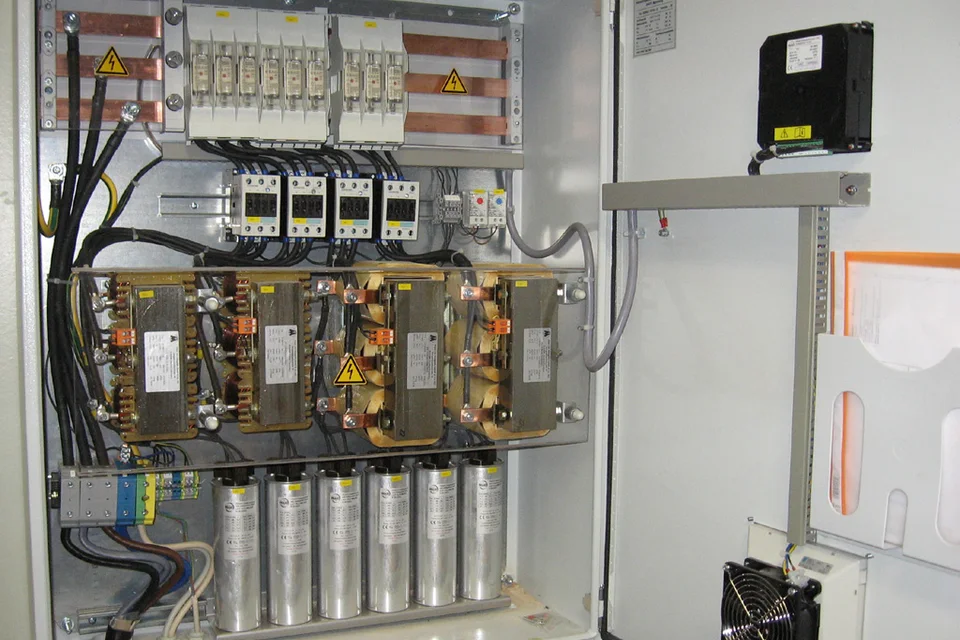
Capacitor bank staging and component selection
Consider a plant retrofitting the capacitor bank at its main low-voltage switchboard after adding variable-frequency drives. The team compares the existing stage schedule with new load and harmonic measurements to decide which stages to retain or replace.
Review demand and size the stages
Review power factor and reactive power at light and typical loads. Use the agreed power factor target and measured demand to define the stage sizes and select a controller with sufficient control outputs.
Choose the detuned stage assembly
If the harmonic assessment calls for detuned stages, compare a matched capacitor and series reactor with a preassembled module that already contains both. Check the combination against system voltage and frequency, required stage kVAr and the detuning factor selected for the measured harmonic spectrum.
Match the switching method
Compare thyristor and hybrid switches against the switching frequency, stage current and controller output. Check the selected device’s documentation for cabinet space and ventilation requirements.
Verify stage switching and power factor
During commissioning, verify that the controller detects the intended stages and switches them as expected. Compare power factor, reactive power and voltage distortion at the same bus under comparable loads before and after the retrofit. Record stage currents and alarms, and check for leading power factor at light load.
Prepare a project enquiry
- Single-line diagram, bus voltage and frequency
- Load profile, power factor target and harmonic measurements
- Existing stage schedule, component nameplates and available cabinet space